150psi
Working Pressure
100k+
Fatigue Cycles
48°C
Max Temp
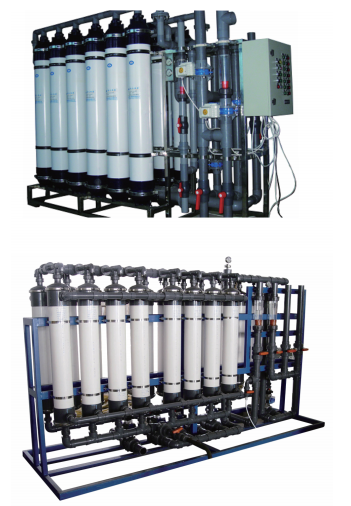
Ultrafiltration (UF) is a membrane separation technology that purifies and separates solutions. The ultrafiltration membrane system is a solution separation device that uses ultrafiltration membrane fibers as the filtering medium, with the pressure difference across the membrane as the driving force. Ultrafiltration membranes only allow solvents (such as water molecules), inorganic salts, and small – molecule organic substances in the solution to pass through, while retaining macromolecular substances such as suspended solids, colloids, proteins, and microorganisms in the solution, thus achieving the purpose of purification or separation.
Early industrial ultrafiltration was applied to wastewater and sewage treatment. Over the past thirty years, with the development of ultrafiltration technology, its application fields have become very extensive. It mainly includes the food industry, beverage industry, dairy industry, bio – fermentation, biomedicine, pharmaceutical chemical industry, biological preparations, Chinese medicine preparations, clinical medicine, printing and dyeing wastewater, food industry wastewater treatment, resource recovery, and environmental engineering, etc.
(1) Ultrafiltration membrane elements adopt products from world – famous membrane companies. This ensures that customers can obtain the highest – quality organic membrane elements currently available worldwide, thus ensuring retention performance and membrane flux.
(2) High system recovery rate. The obtained product quality is excellent, and it can achieve efficient separation, purification, and high – multiple concentration of materials.
(3) No phase change occurs during the treatment process. There is no adverse impact on the components of the materials. During the processes of separation, purification, and concentration, it always remains at room temperature. It is especially suitable for the treatment of heat – sensitive substances and completely avoids the disadvantage of high temperature destroying bioactive substances. It effectively retains the bioactive substances and nutritional components in the original material system.
(4) Low system energy consumption and short production cycle. Compared with traditional process equipment, the equipment operating cost is low, which can effectively reduce production costs and improve the economic benefits of enterprises.
(5) Advanced system process design and high integration degree. The structure is compact, the floor area is small, and the operation and maintenance are convenient. The labor intensity of workers is low.
(6) The system is made of sanitary – grade valves and fittings. The on – site is clean and hygienic, meeting the production specifications of GMP (Good Manufacturing Practice) or FDA (Food and Drug Administration).
(7) The control system can be designed in a personalized manner according to the user’s specific usage requirements. Combined with advanced control software, it can centrally monitor important process operation parameters on – site, avoid manual operation errors, and ensure the long – term stable operation of the system in multiple ways.
Send us your project requirements and our technical team will respond with detailed specifications, pricing, and lead times within 24 hours.