

An FRP water treatment tank can be a long-service component, but its real lifespan is not decided by the calendar alone. Wrong pressure, unsuitable water chemistry, poor installation, or weak materials can shorten service life fast. I always suggest buyers treat lifespan as a selection and risk-control question first.
An FRP water treatment tank can last for many years under proper operating conditions, but there is no universal fixed lifespan. Its service life depends on rated pressure, temperature, media compatibility, tank structure, material quality, installation, and maintenance. Buyers should verify specifications, certifications, and test data before procurement.
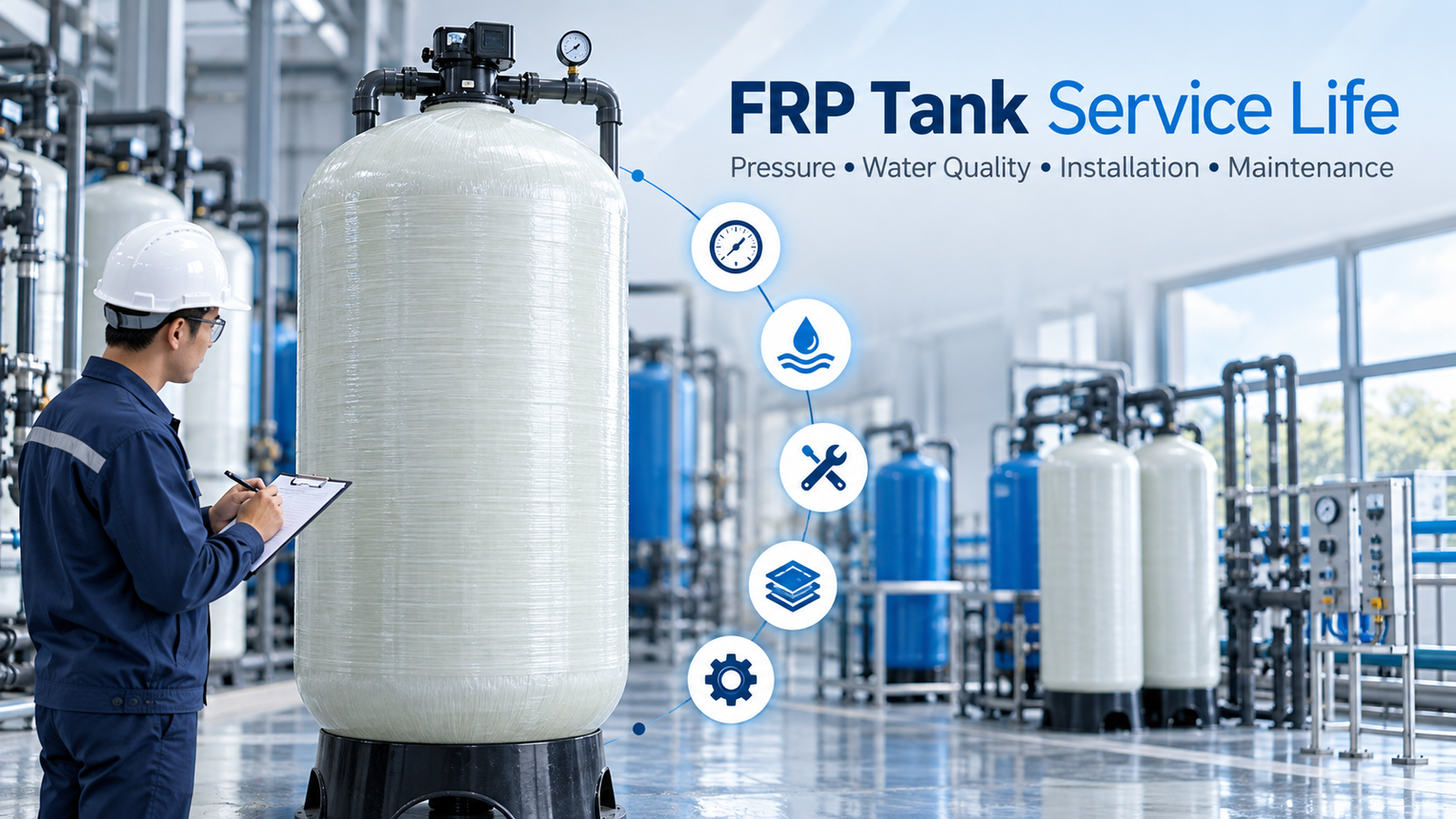
The better question is not only “How long will it last?” It is “Is this tank correctly matched to my system?” That shift helps procurement managers reduce failure risk, downtime, and after-sales disputes.
What Affects FRP Water Treatment Tank Lifespan?
A tank does not fail because of one simple reason. In my factory experience, service life usually depends on several conditions working together. Pressure, temperature, water quality, and installation all matter.
A FRP water treatment tank lasts longer when it operates within its rated limits, uses compatible media, and is installed correctly. Overpressure, water hammer, high temperature, aggressive chemicals, UV exposure, and poor handling can reduce durability.

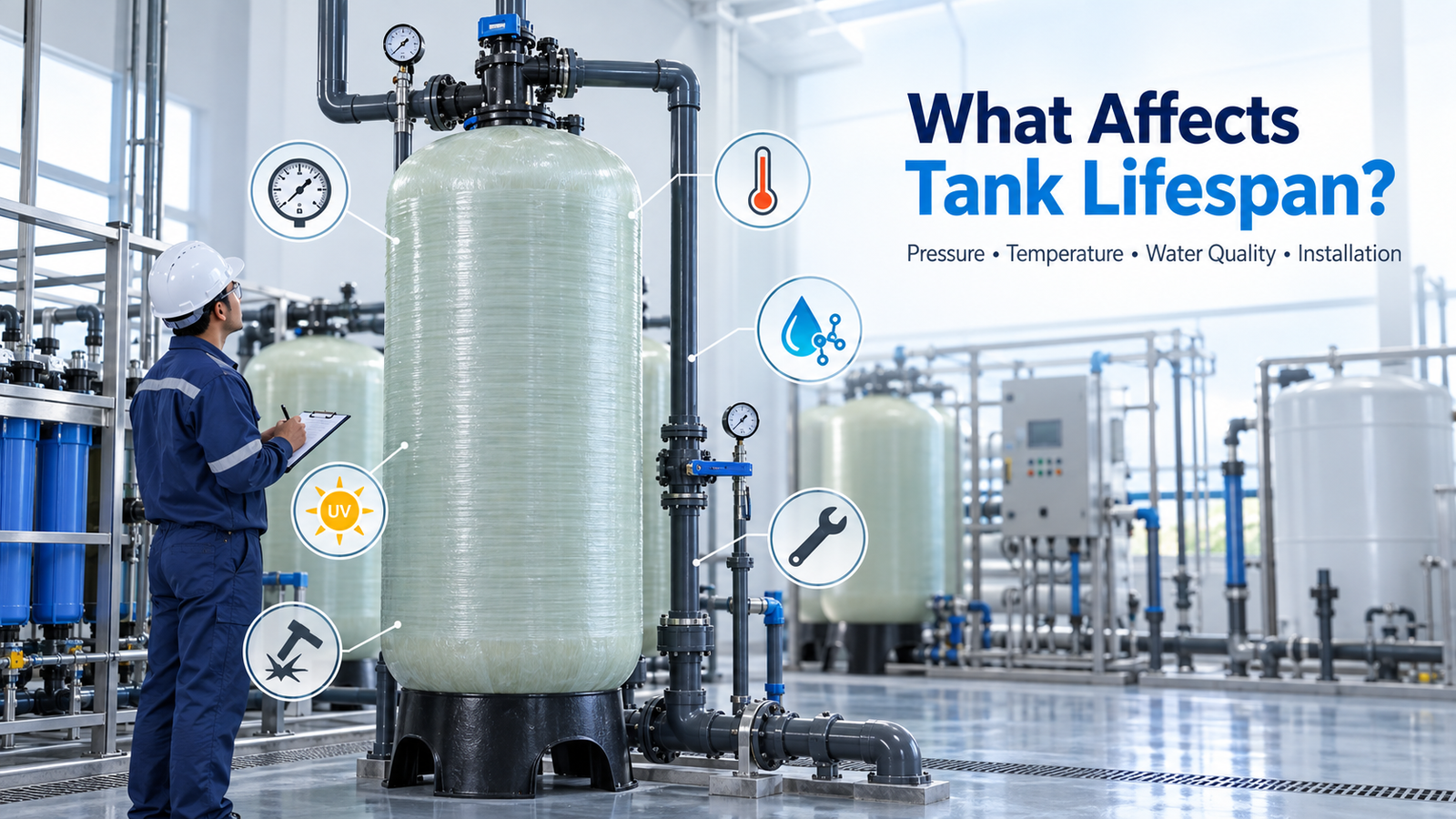

Key factors buyers should check:
| Factor | Why It Matters |
|---|---|
| Working pressure | Constant overload weakens the pressure structure |
| Pressure shock | Water hammer can damage the tank faster than steady pressure |
| Temperature | Excess heat may affect liner and resin performance |
| Water chemistry | Some media may not be suitable for standard FRP tanks |
| Installation | Uneven base, wrong piping stress, or impact can shorten life |
| Maintenance | Regular inspection helps catch leaks, cracks, or abnormal pressure |
For example, Hedelong’s standard FRP pressure tanks are designed around rated working conditions such as 10.5 bar / 150 psi and 1–48°C. These numbers are not decoration. They define the safe operating window. If a project goes beyond that range, the buyer should request technical confirmation before placing an order.
Why Can an FRP Water Treatment Tank Perform Well?
FRP works well in many water treatment systems because it combines different materials for different jobs. The inner liner contacts water. The fiberglass-reinforced outer layer provides strength. The resin bonds the structure.
An FRP water treatment tank performs well when its PE liner, fiberglass reinforcement, resin system, and winding process are controlled correctly. This structure helps resist corrosion and pressure in typical filtration, softening, and RO pretreatment applications.
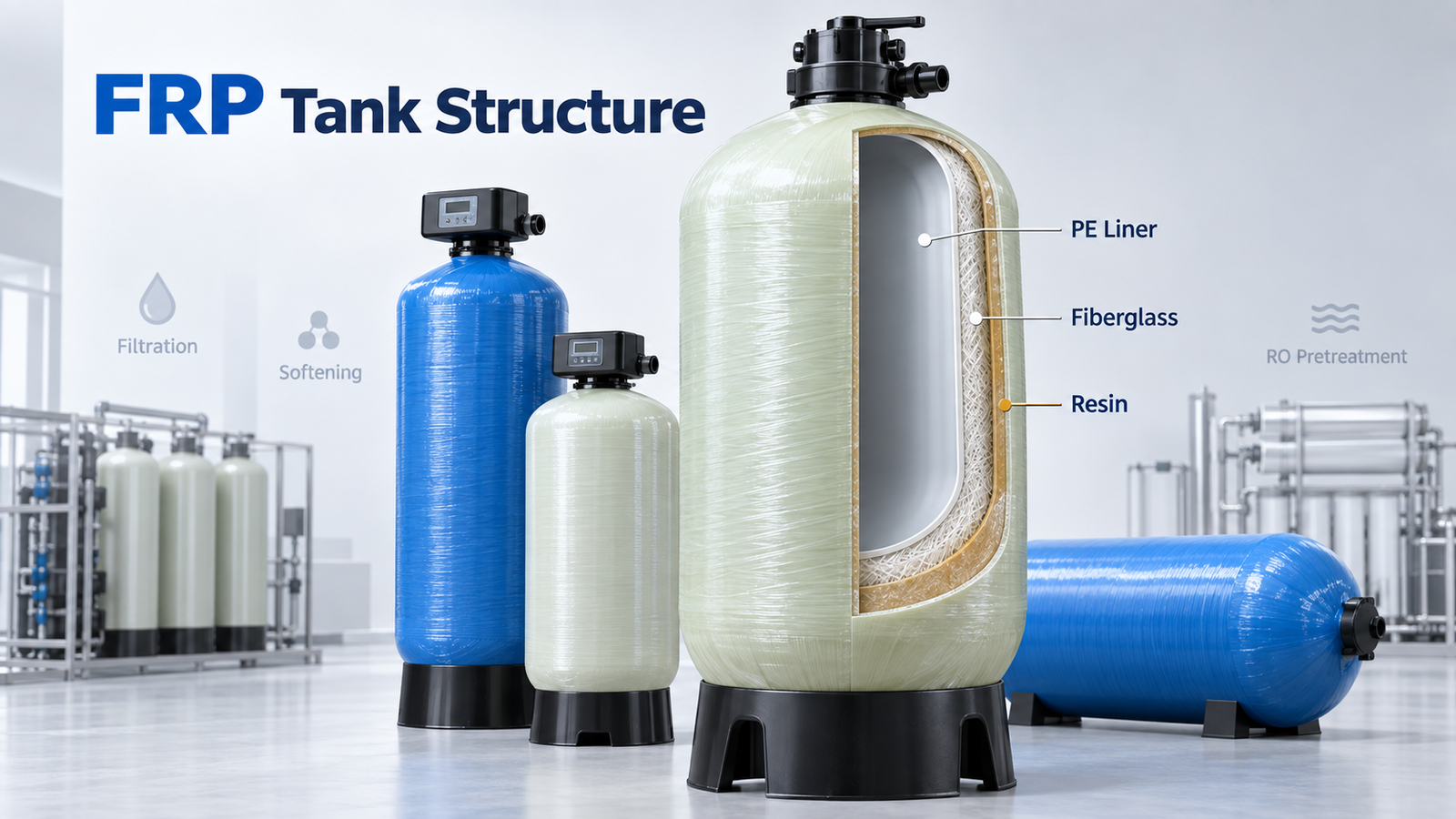
I like to explain it this way: the liner is like the clean inner skin, while the fiberglass winding is like the muscle. One protects the water contact surface. The other carries pressure load.
Buyers should focus on:
- Food-grade water-contact material
- Consistent liner thickness
- Stable fiberglass winding
- Reliable resin bonding
- Smooth tank mouth and interface
- Correct thread or flange type
However, FRP is not automatically suitable for every liquid. Strong chemicals, high temperatures, special industrial wastewater, or outdoor exposure may need special evaluation. A responsible supplier should not simply say “no problem” to every application. I recommend confirming the medium, temperature, pressure cycle, and installation environment before final selection.
How Do Quality Tests Reduce FRP Water Treatment Tank Risk?
Quality control does not make a tank immortal. But it gives buyers evidence. It shows whether the tank was designed and produced to meet declared performance levels.
For an FRP water treatment tank, buyers should review rated pressure, temperature range, certifications, fatigue cycle testing, and factory inspection records. These documents help reduce procurement risk and support supplier comparison.
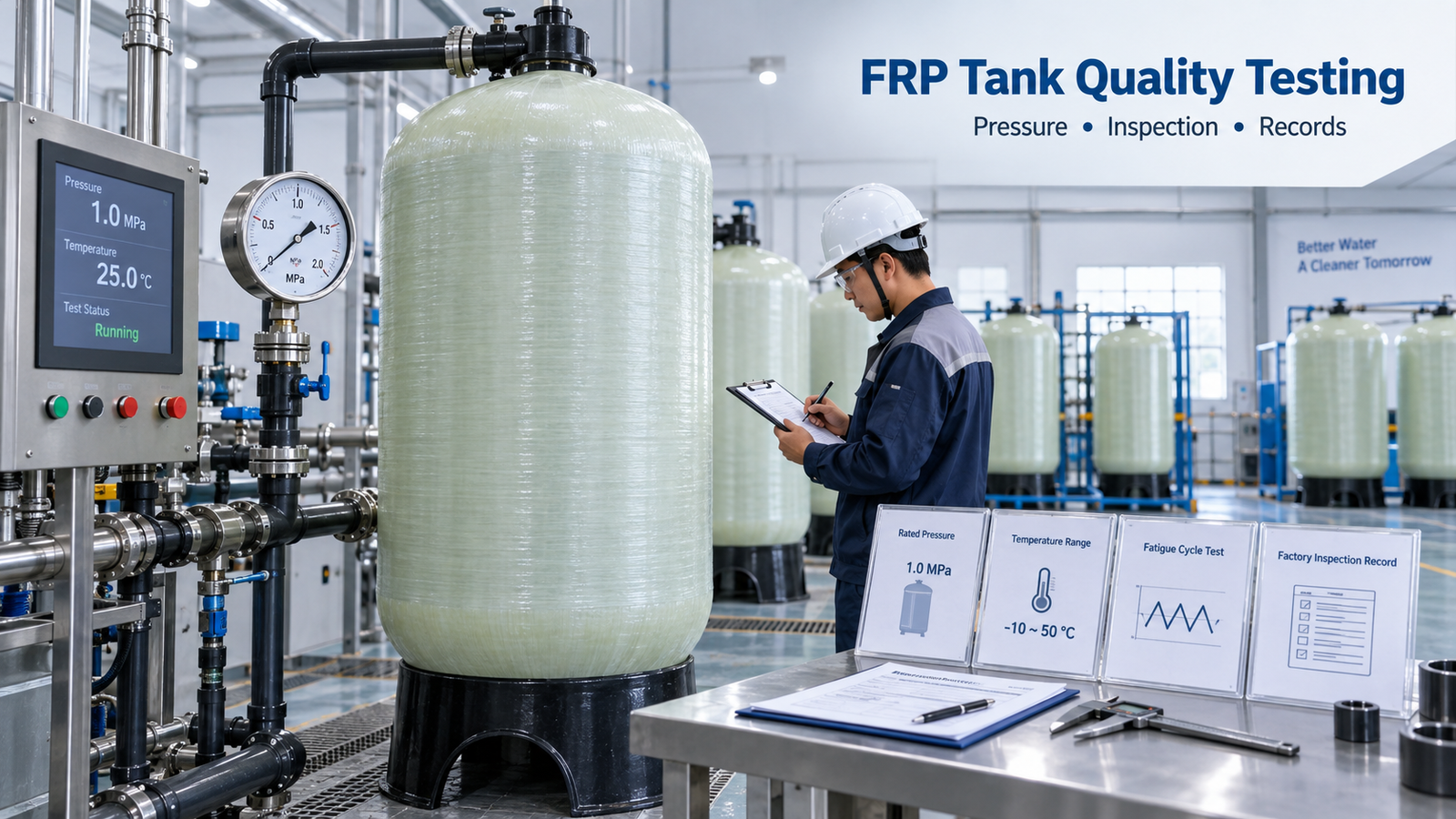
At Hedelong, we connect testing with practical durability. For example, pressure-cycle testing such as repeated 0–150 psi fatigue cycles is useful because water treatment systems rarely stay perfectly stable. Pumps start. Valves close. Pressure rises and falls.
Buyers should verify:
- CE, NSF, ISO9001, or hygiene documents where required
- Rated working pressure and test pressure
- Temperature limits
- Tank model, size, opening type, and interface standard
- Batch consistency for repeat orders
- Packaging strength for export transport
Certifications should be treated as documents to verify, not slogans to trust blindly. I suggest asking for current certificates, product data sheets, and model-specific information.
When Should You Replace an FRP Water Treatment Tank?
A tank should be replaced when it shows damage, leakage, deformation, abnormal pressure behavior, or when the project condition has changed beyond the original design.
An FRP water treatment tank may need replacement if there are cracks, bulging, leaking at the opening, damaged threads, unusual noise during operation, or repeated pressure instability. A qualified technician should inspect uncertain cases.
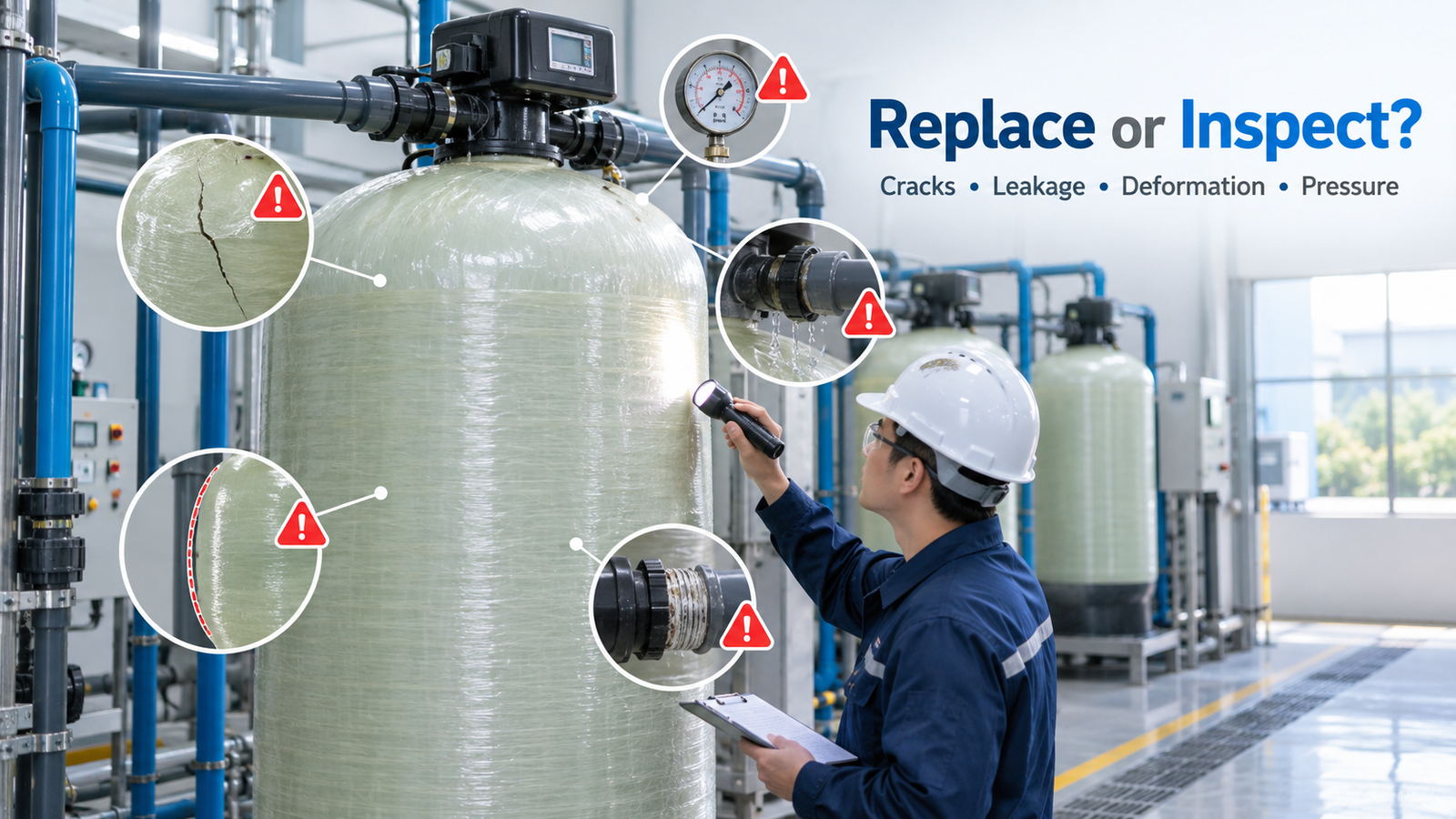
Practical warning signs include:
- Visible cracks or fiber exposure
- Leakage near the valve or flange
- Bulging body shape
- Damaged base
- Severe impact during shipping or installation
- System pressure above rated value
- Chemical change in the treated water
For overseas buyers, replacement risk is not only a maintenance issue. It affects project reputation, shipping cost, customer complaints, and lifecycle cost. That is why I prefer careful model selection before shipment instead of solving problems after installation.
Frequently Asked Questions
Is an FRP water treatment tank better than steel?
Not always. FRP offers good corrosion resistance and light weight in many water treatment applications. Steel may be preferred for some high-temperature, high-pressure, or special industrial conditions. The correct choice depends on project data.
Can I use one FRP tank for any water treatment system?
No. You should confirm pressure, temperature, water chemistry, flow rate, tank size, and interface type. Standard tanks are not suitable for every medium or every operating environment.
What documents should I ask from a supplier?
You should ask for product specifications, pressure rating, temperature range, certification documents, hygiene approval if needed, and test information. For large projects, sample approval and professional engineering review are also useful.
Does color affect tank lifespan?
Color mainly affects appearance and project matching. In outdoor or special environments, UV exposure and coating protection should be discussed with the supplier. Color alone does not replace correct material selection.
Conclusion
An FRP water treatment tank does not have one fixed lifespan for every project. Its service life depends on correct selection, rated working conditions, material quality, production control, installation, and maintenance. I suggest buyers compare suppliers by real specifications, verified certificates, pressure data, and customization ability—not only price. If you are selecting tanks for a filtration, softening, or RO pretreatment project, contact Hedelong to confirm the right model, interface, color, and operating conditions before bulk purchase.