

An FRP filter tank leaking on a project site can slow commissioning, create blame between installers and suppliers, and raise concerns about product quality. I do not treat the tank as defective first. I start with a structured check of the leak location, sealing points, interface type, and operating conditions.
The filter element made of glass fiber can adjust the flow rate. The installation positions include the valve head, O-ring, threaded connection, blade, distributor connection, as well as the neck or body of the storage tank. First, appropriate measures should be taken to accurately record the specific location of the leakage, pressure, temperature, interface type and on-site photos, in order to determine whether the cause of the leakage is due to the equipment, joints, system load or the quality of the storage tank itself.
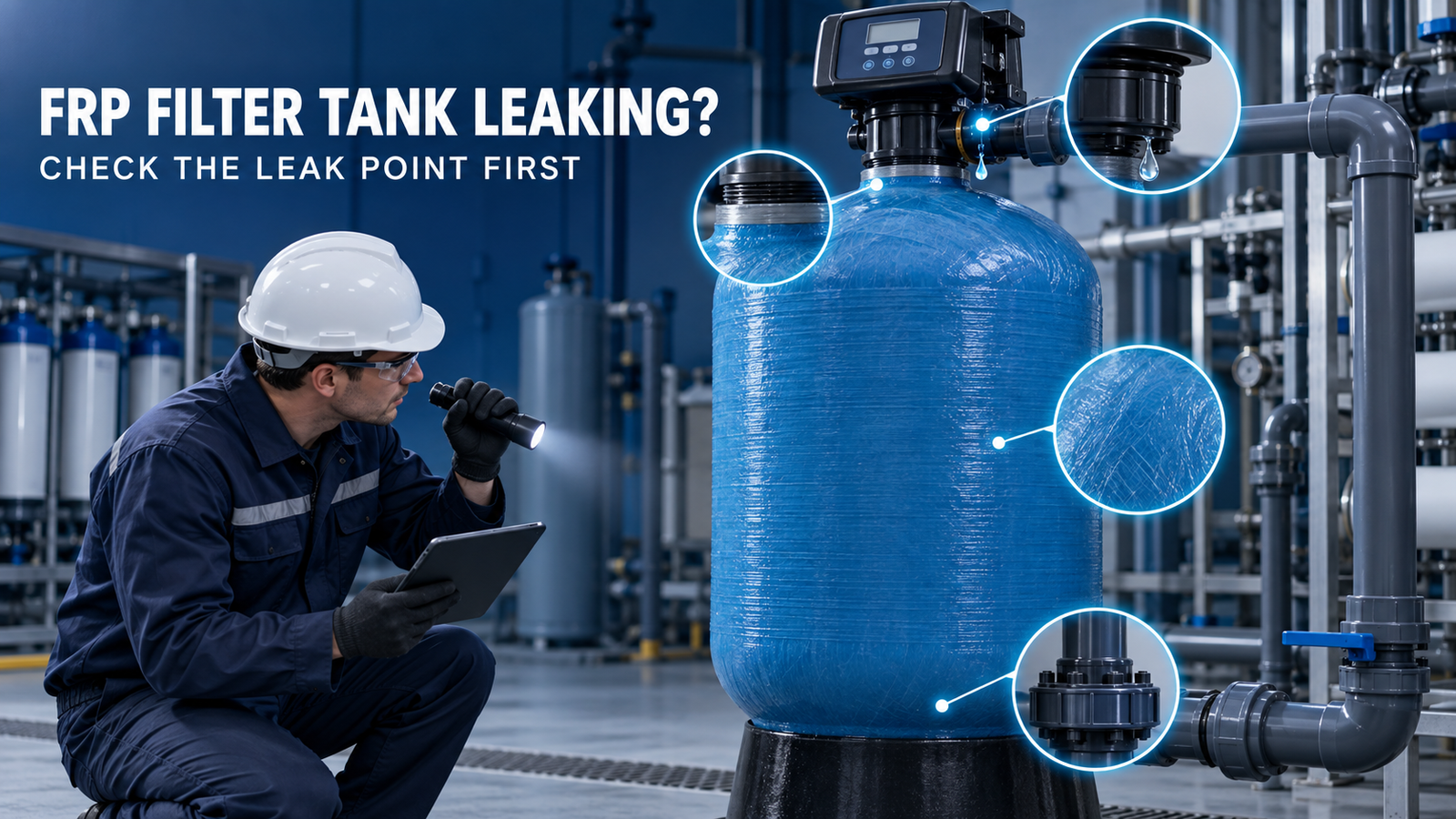
In our customer troubleshooting, we usually ask for photos and basic operating data before giving conclusions. This keeps the discussion practical. It also helps buyers avoid common false fixes that can make the leak worse.
How should I diagnose an FRP filter tank leaking by location?
A leak looks simple from outside, but the source can be misleading. Water may appear on the tank surface even when the real issue starts at the valve, flange, or pipe connection.
The best way to diagnose an FRP filter tank leaking is to check from the top interface downward: valve head, O-ring, threads, flange, distributor connection, tank neck, and finally the tank body. This order separates sealing problems from structural problems.
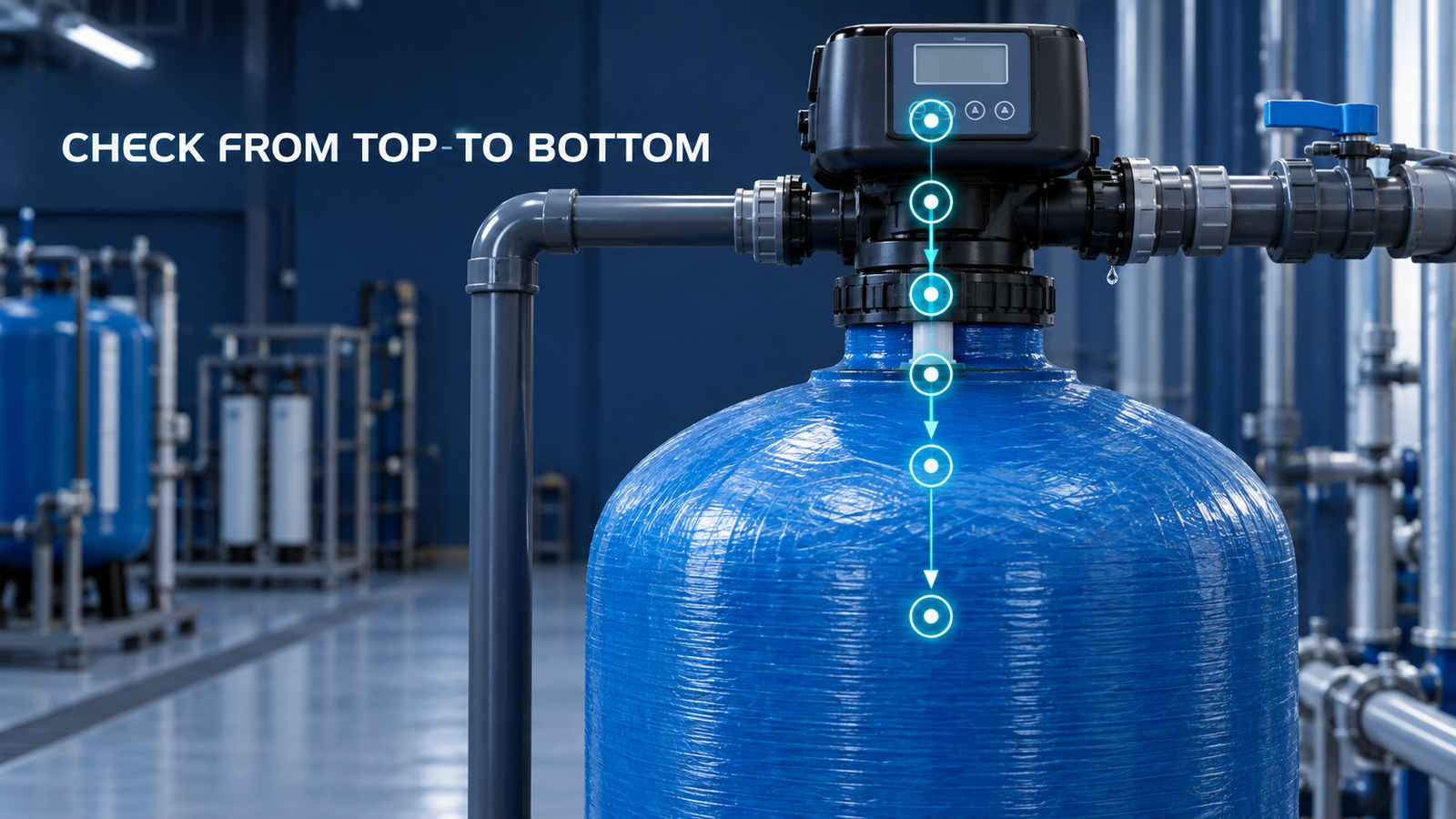
Practical leak-location sequence
I recommend this order because it matches what we often see in after-sales cases:
-
Valve head or control valve area
Check whether water appears between the valve and tank neck. This often points to O-ring damage, wrong installation angle, poor seating, or overtightening. -
Threaded connection
Check whether the thread type matches. Forcing incompatible threads can damage the tank neck or valve base. -
Flange connection
Check gasket position, bolt tightening sequence, and flange flatness. Uneven tightening can create a small but persistent leak. -
Distributor connection
Check whether the internal distributor is correctly aligned. Misalignment can create stress during assembly. -
Tank neck
Inspect for cracks, deformation, or thread damage. This area is sensitive to overtightening and side pipe load. -
Tank body
If water appears directly through the FRP shell, stop operation and contact the supplier. This requires product inspection, not guesswork.
| Leak area | Common cause | First action |
|---|---|---|
| Valve head | O-ring issue, poor seating | Remove, inspect, reseat |
| Thread | Mismatched thread, overtightening | Verify interface spec |
| Flange | Uneven gasket compression | Retighten in cross pattern |
| Neck | Stress or damaged thread | Stop forcing connection |
| Body | Possible vessel damage | Isolate and report |
I usually ask customers for one close-up photo and one wider photo showing the piping. The wider photo often reveals pipe stress that the close-up hides.
When is an FRP filter tank leaking caused by system conditions?
A tank may leak even when the vessel material is not cracked. Pressure spikes, water hammer, pipe stress, high temperature, and poor alignment can overload seals and connections.
An FRP filter tank leaking under certain operating conditions should be checked against rated pressure, temperature, flow design, and piping support. If the system exceeds the tank’s design range, the leak may be a symptom of installation or application mismatch.

Conditions that often create leaks
In B2B water treatment projects, I pay attention to these points:
- Working pressure: Confirm the tank is used within its stated pressure rating.
- Temperature: FRP tanks for water treatment usually have defined temperature limits.
- Water hammer: Fast valve closing can create pressure spikes beyond normal gauge readings.
- Pipe stress: Unsupported piping can pull the valve or flange sideways.
- Chemical compatibility: Some chemicals can affect seals, liners, or fittings.
- Thread compatibility: Similar-looking threads are not always interchangeable.
At Hedelong, our FRP pressure vessels are produced with PE inner liners and FRP winding structures, and standard models are designed around common water treatment pressure requirements such as 150 psi working pressure. Buyers should still verify the exact model data sheet before using the tank in a specific project.
False fixes to avoid
I see three mistakes often:
-
Adding too much PTFE tape
More tape can increase radial stress and make thread engagement worse. -
Overtightening the valve
Excess force can deform seals or damage threads. -
Forcing mismatched fittings
If the thread does not match, force will not make it safe. It may only hide the problem temporarily.
A good troubleshooting report should include:
- Leak location
- Tank model and interface type
- Operating pressure
- Water temperature
- Fluid type
- Installation date
- Photos before disassembly
- Photos after removing valve or flange, if safe
How can procurement reduce FRP filter tank leaking risk?
Leak prevention starts before installation. A buyer should evaluate tank specifications, interface compatibility, quality-control records, and supplier response capability before placing a bulk order.
To reduce the leakage risk of FRP filter tank leaking, the purchasing team needs to verify the pressure rating, temperature range, certified materials, interface design drawings, fatigue test reports, and the supplier's after-sales service.

What I suggest buyers verify
For distributors, system integrators, and project engineers, I would check these documents:
| Procurement item | Why it matters |
|---|---|
| Pressure rating | Confirms suitability for operating conditions |
| Interface drawing | Prevents valve, flange, or thread mismatch |
| Material statement | Supports potable water and chemical compatibility review |
| Certification documents | Helps buyers verify CE, NSF, ISO, or hygiene requirements |
| Fatigue test data | Shows durability under repeated pressure cycles |
| Packing standard | Reduces transit damage |
| After-sales process | Speeds up troubleshooting if problems occur |
For example, our FRP tanks use food-grade water-contact materials and are produced through controlled winding and molding processes. We also support interface and color customization for project matching, but I still advise buyers to confirm drawings before mass installation.
A simple supplier question list
Before ordering, ask:
- What is the rated working pressure and temperature?
- What valve or flange standards are compatible?
- Can you provide drawings before production?
- What certifications can be verified?
- What photos or data do you need if leakage occurs?
- Can you support batch supply with consistent specifications?
This approach protects both sides. The buyer gets clearer accountability. The supplier gets enough data to respond accurately.
Frequently Asked Questions
Should I replace the FRP filter tank immediately if it leaks?
No. I would first record the leak location, pressure, temperature, interface type, and photos. Many leaks come from seals, threads, valves, or piping stress rather than the tank body itself.
Can too much PTFE tape cause a leak?
Yes. Too much PTFE tape can create excess thread stress, poor seating, or misalignment. I prefer verifying the thread standard and seal design before adding more tape.
Is a leak at the tank neck serious?
It can be serious. A neck leak may come from an O-ring, valve seating, damaged thread, or pipe stress. If cracking or deformation appears, stop operation and contact the supplier.
What photos should I send to the supplier?
Send one close-up of the leak point, one wider photo showing piping support, and photos of the valve or flange interface. Include the tank label, pressure reading, and operating temperature if available.
Conclusion
An FRP filter tank leaking should be diagnosed step by step, not judged too quickly. I start with the leak location, then check seals, threads, flanges, pipe stress, pressure, and temperature. For bulk buyers, the best prevention is clear specification control and a responsive supplier. If you are selecting FRP filter tanks for a project, contact Hedelong with your pressure, interface, size, and certification requirements.